First Aid Course

2015-02-25T10:09:35+01:00February 15th, 2015|

Second year student, and dedicated First-aider Bob Okello writes:

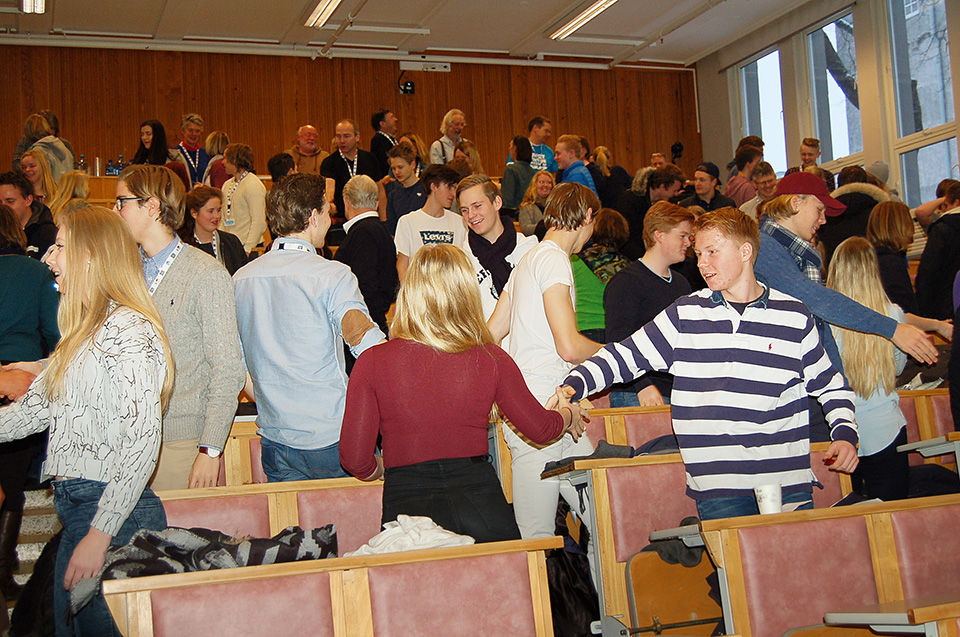
This year’s edition of the Annual First Aid Course was noteworthy for its high levels of energy  and enthusiasm. The three-day training course for our first years took place from Wednesday 28th to Friday 30th January under the keen leadership of the well-trained and dedicated group of second year students who collectively made up the First Aid team, under the close supervision of teacher David Robertson.

The mandatory ‘Tolv timer førstehjelp’ course that involved all the first year students and a number of staff members comprised of an introduction to basic First Aid, with several workshop modules on advanced First Aid skills, offering both theory and practice. The participants were put in groups of 10 to 12 members and each group was led by a member of the First Aid team.

The first day of the course had the participants being introduced to the various aspects of basic First Aid. This included sessions on how to assess the scene of an accident; how to assess an accident casualty and how to perform basic body checks.

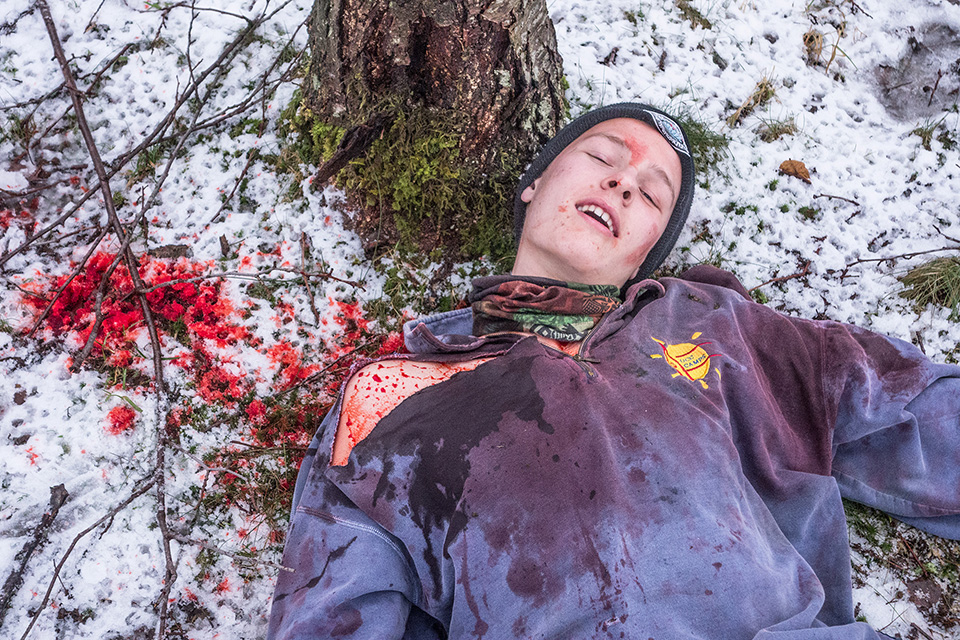
During the second day of the course, the participants were led through a series of workshops in rotations. The workshops all focused on different and specific areas of First Aid some of which included the different kinds and applications of bandaging, treatment of soft tissue injuries, scalds and burns, bleeding, epilepsy, hypothermia and how to deal with breathing problems such as choking. The workshops were dramatised with real-life simulations. The day was very successful.

The last day of the course was exciting! The participants now had to test their newly-acquired skills and apply the knowledge they had learnt over the preceding days.  The participants sat a forty-minute written assessment to test their knowledge on the important theoretical aspects of the course. Their practical skills were then assessed with CPR and bandaging being the key assessment areas. Every group was then presented with a scenario in which they had to combine all their skills and knowledge to handle the situation at hand. The scenarios were scary, they were close to reality. It was tense.  There were simulated skiing accidents, laboratory fires, and out-of-control parties. The participants were then given a feedback on their individual and group performance in the scenario which marked the end of the ‘Tolv timer førstehjelp’ course.

With the Red Cross as an important part of our identity at UWC Red Cross Nordic, the annual first aid course is one of the ways in which our shared values and philosophy blend.

This year’s First Aid Course was a remarkable success. Rektor Richard Lamont applauded all those who contributed to making the course a smooth and successful one.
Sound of the Human Being

2018-10-16T09:33:23+01:00February 12th, 2015|

Starting on 11th February, HIFUS and the companies at Haugland hosted a two-day seminar with a focus on health and human resourcefulness, with participants from many sectors. The theme of the seminar was: “The Sound of the Human Being”.

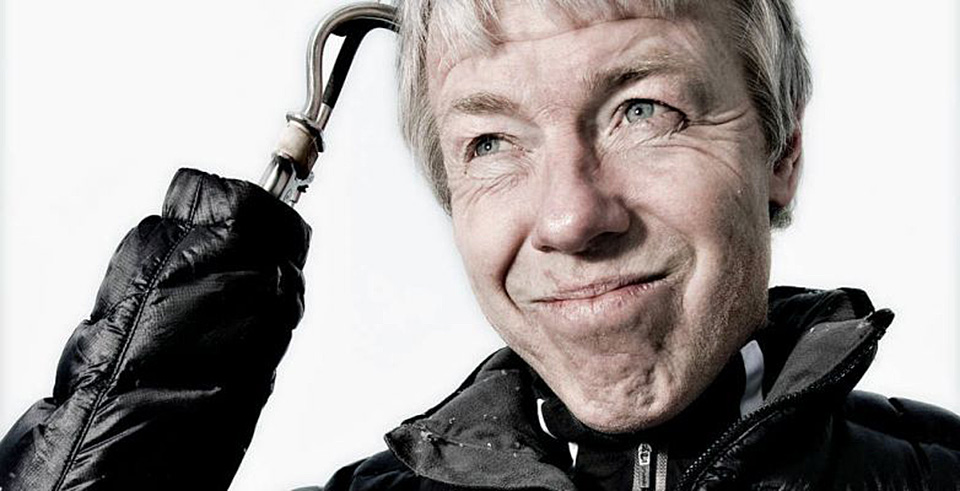
Cato speaking in the auditoriumThe seminar opened with a lecture by Cato Zahl Pedersen in English in front of a packed auditorium. Cato told his own story (“Unarmed to the South Pole”) to the first year students and delegates – an inspirational introduction to health, how to find your own resources, and how to take responsibility for your own situation. Cato’s clear message to those gathered in the auditorium was that he sees himself as ‘differently abled’ rather than ‘disabled’ – and he reminded us how lucky and happy we should feel to be alive in this wonderful world.

Cato is also the Chair of Ridderrennet and is looking forward to seeing our participants there – taking to the white elements.

Read more about the conference here.

ENOVA in Trondheim

2018-10-16T09:33:23+01:00February 10th, 2015|

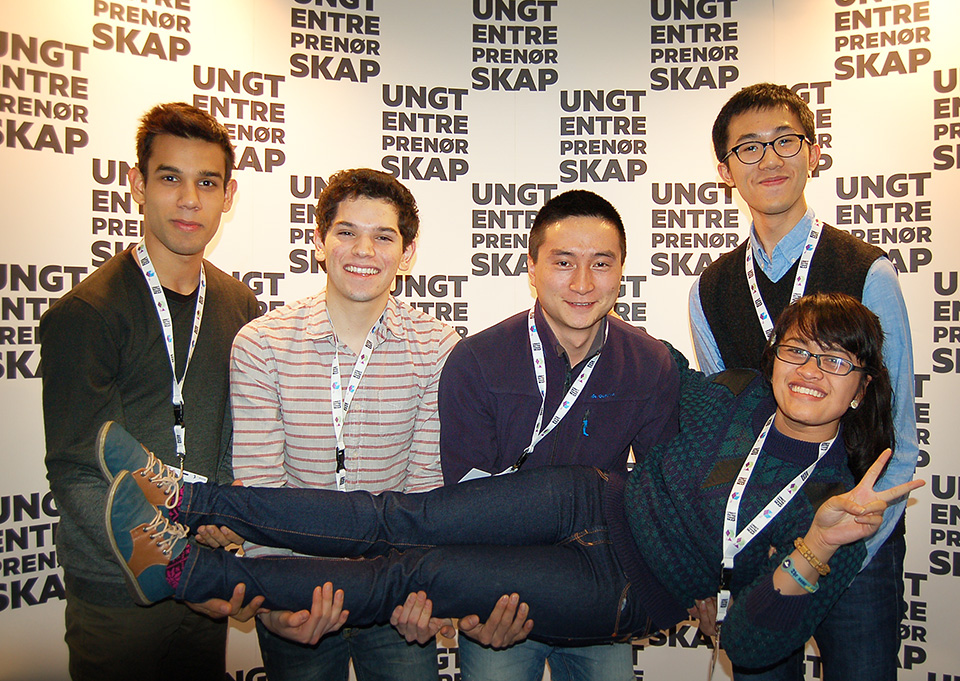
On the 2nd of February, a non-Norwegian-speaking team of five students and one staff member set off to Trondheim to participate in a Norwegian-conducted national competition on energy innovation held by the Norwegian organisation Ungt Entreprenorskap.

Flying off to Trondheim in a small aeroplane, we were buzzing with anticipation as we contemplated meeting our Norwegian peers and engaging in meaningful debates about the state of the global climate today.

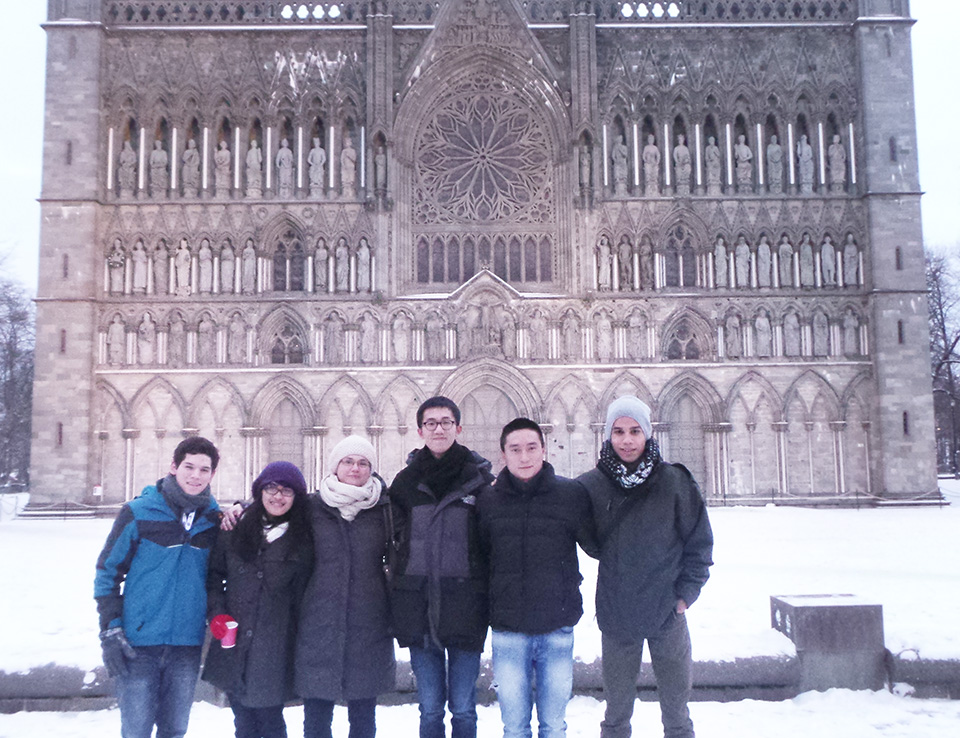
Trondheim cathedralBefore anything started, we first toured Trondheim. Led by our motherly leader – Judit Barbara Dudas – we marveled at the medieval Nidaros Cathedral as we slipped and shrieked on the icy ground, and experienced the budding consumerist culture of this city in its mall Trondheim Torg, where we tried to persuade Judit to buy us sushi. We failed.

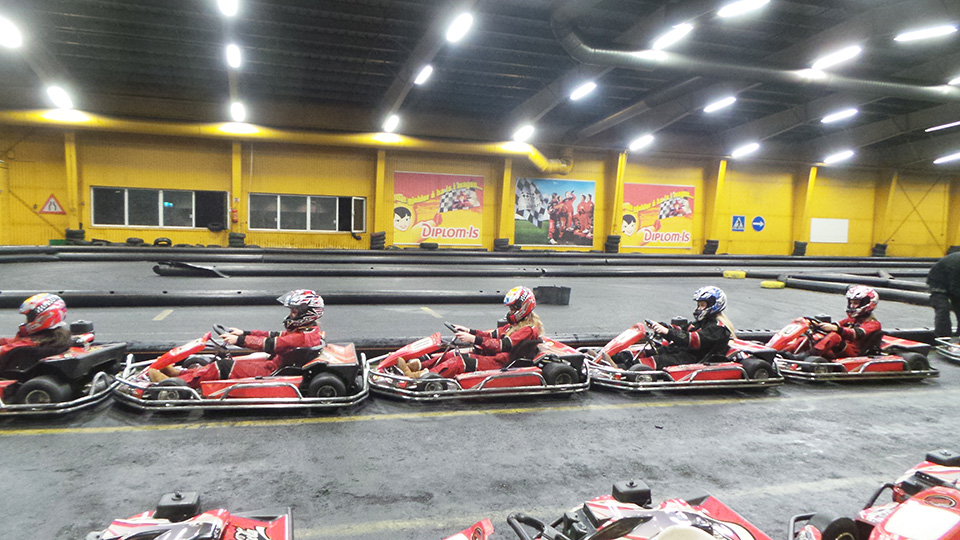
Filled with the pizza we had instead, we boarded a fleet of buses that whisked us to an arcade far away from the heart of the city. Bemused by the torrents of Norwegian, we blundered about, wailing “Du snakkar engelsk? Vi snakkar ikke norsk.” Luckily, we were saved by one of the organisers who explained to us that we were about to go go-karting and bowling. We saw this as a chance to integrate ourselves into Norwegian teenage society.

Go-karting!Observing safe driving regulations as we careened about the go-karting track and delicately rolling bowling balls with the poise of UWC students, we actually did manage to forge lasting relationships with some of our Norwegian peers. We realised that even though we might be different in some ways, we actually are concerned about the same issue and devoted to its solution – global warming.

After experimenting with bowling techniques that ranged from the conventional to the forward-pelvic-pendulum-swing, we retired to our hotel.

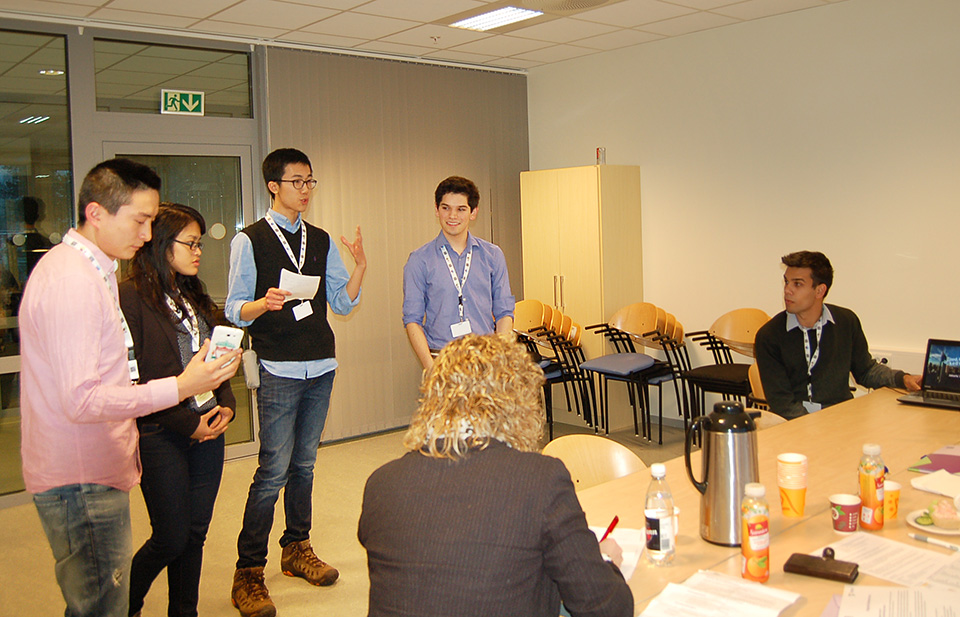
The next day there were presentations by students from the Norwegian University of Science and Technology (NTNU) and corporate heads of ENOVA SF (the government corporation responsible for the promotion of environmentally friendly production and consumption of energy) about creative energy solutions. Exercises to stimulate creativity included connecting dots on paper with straight lines creatively, drawing spider diagrams creatively and devising quick solutions to reduce household energy consumption.

Hard at work

Then came the big moment – the announcement of the challenge for 2015’s ENOVA competition. It was probably very suspenseful as the head organiser gave her opening speech, but because it was in Norwegian none of us really understood. It was only when there was a collective intake of breath that we looked up and noticed that the Powerpoint presentation now read “transportsystem”.

After that, we were whisked to the high school where we would spend the next 24 hours labouring over our task – to develop a sustainable transportation system for a city. Charlottenlund VGS (where we were now domiciled) was a high school so modern and well-appointed that in any other country it would be considered a corporate building. We gawked at the sleek grey walls, the wooden banisters, the hospital-clean toilets and the modern colour scheme of black and orange.

Unfortunately, we did not stay for long because we were escorted to the sports hall that would be our true home until the final presentations. There we devised our strategy with invaluable assistance from our marshal, Judit. By attacking the problem with social advertising campaigns, technological innovation and governmental policies, we felt we were sure to win.

Five hours later, we weren’t so sure anymore. We were experiencing “demotivation” and “malaise” – states that were hitherto alien to us – as we waded through government research websites with carbon dioxide emission statistics and pollution taxation rates. However, it seemed that ENOVA had been expecting our willpower to drain at this point, for the organisers had prepared an hour-long “fun time”.

That “fun time” turned out to be physical time. At 10pm, we were escorted to another section of the sports hall with a team from Ringerike VGS from Buskerud and told to flip a huge mattress as many times as possible.  We wondered whether this was a psychologist-approved method of stimulating creativity in adolescents. Or maybe it was just a way to make us sleepy so we would stop bothering the organisers. Either way, we were trapped in this.

Next up: weightlifting. This was just thoroughly embarrassing for us. The barbell had weights that looked like cute purple marshmallows but they were as heavy as 10 MacBooks Pros. While each of us took 10 seconds to lift up the whole thing, the Norwegian boys next to us were pumping their barbells up and down like they were chopsticks. Then it was dart-throwing to hone our mental precision but we only felt more muddled after that. The activity after that just seemed cruel – wall squats. With a middle-aged man watching us with a stopwatch in hand, all of us had to press our backs against the wall and whimper as the muscles in our thighs disintegrated. Embarrasingly enough (for us, anyway), the Norwegian boys were all practising proper breathing exercises and listening to the appropriate exercise tunes as they stoically tensed longer than us. The UWC-ers had all crumpled after 2 minutes.

Invigorated after that hour of exertion, we went back to our project refreshed.

We had brought sleeping bags, but those remained tightly bound as we pounded on our keyboards to 5am. Next to us, Norwegian teenagers inflated the air mattresses that they had brought with them – the mattresses looked bigger, and more comfortable, than the beds we have at UWCRCN!

At 7am, we hit ‘Send’ and our report was off to the organisers. At 7.30am, our guide, Judit, helped us practise our presentation even as we were collapsing from sleep deprivation.

At 9.20am, we presented! The jury was speechless after we drilled them with figures and equations (courtesy of Ricardo) but it was probably more due to confusion than awe.

Instead of announcing the finalists beforehand, we had to sit in the auditorium and wait as they were called one-by-one to present.

Hand shakes all roundIt was all bicycles and Maglev (magnetic levitation). Every idea consisted of building a Maglev subway system for the city. We should have done Maglev. We thought we were going to be placed as the last finalist for theatrical purposes but the last finalist was another Maglev group.

Judit comforted us as we left the auditorium with our heads down and our hearts heavy. Even though we didn’t win anything, we were glad that we had gone through this experience. We had come together as a team and worked together even as we sank further into despair and exhaustion. We had forged new friendships with our Norwegian peers and had strengthened existing ones amongst ourselves. And most importantly, we had learnt that Norwegian high school competitions always involve hidden physical activities – and Maglev.

Brandon Mok (UWC RCN 2013-2015)

Eirik Fismen

2018-10-16T09:33:23+01:00February 10th, 2015|

Today Eirik Fismen, long-serving doctor at the Haugland Rehabilitation Centre, came to the College Meeting to receive our grateful thanks on the occasion of his retirement.

Larry offered the following address:

It is a great pleasure to welcome Dr Eirik Fismen here today.

Eirik has been the senior doctor at the Rehabilitation Centre for over twenty years and has been a committed, strong and loyal supporter of UWC Red Cross Nordic – and the partnership here at Haugland.

Earlier in his career, Eirik was fortunate to work alongside and forge a partnership with the inspirational Erling Stordhal, at Beitostolen. For students here today, it was Erling Stordahl who launched Ridderrenet, championed sport for the visually impaired and encouraged us all, in the spirit of Kurt Hahn, to believe that ‘there is more in you than you think’.

Eirik  brought the philosophy of functional independence and the spirit  of  possibility to the campus here at Haugland. He was one of the key founders and contributors to RCN’s landmine programme – now the Survivors of Conflict Programme – and has provided medical and personal support, motivation and inspiration to a long list of students over the past twenty years. Both Eirik and Kari, his wife, have opened their home in Askvoll as host parents and have, time and again, extended the hand of friendship to students and staff at RCN.

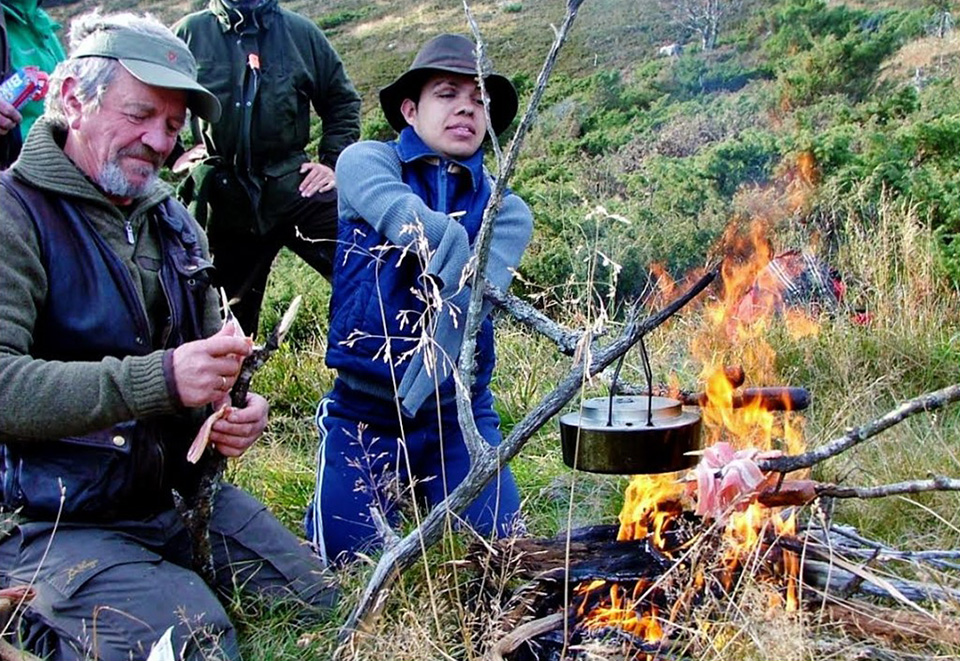
Eirik is a great believer in and practitioner of friluftsliv – and there is evidence across the campus as to his vision for friluftsliv’s role in rehabilitation and education – from fire pits to the gapahuk overlooking the fjord, from the sami game (hobbit house) to trails across the mountainside. Patients and students alike have benefitted enormously from his creative vision.deep passion for the outdoors and

One of my favourite memories since becoming Rektor was being invited by Eirik to take Edwin, Yeison, plus Jose Luis and Cerren on a hunt on a golden autumn day on the mountains above Askvoll. No deer was shot that day by the hunters – and perhaps the most spectacular moment came when a beautiful stag erupted at top speed from a forest and literally jumped over Yeison who understandably, given the gradient of our ascent, had fallen asleep in the long grass!

Eirik, you have given an enormous amount to our world here. Through your cartoons, your dynamic and positive approach, and your professional commitment, you have taught us to see the resourcefulness of each individual. The students, who have come under your care, have been given the confidence to seek functional independence both on campus and beyond and to take on new challenges, new opportunities.

With two sons as alumni of UWC (at Singapore and Atlantic College), you know and appreciate the impact of a UWC education on students from all over the world.

You are also a great believer in the partnership, or as you call it the ‘symbiosa’, between the College and the Rehabilitation Centre.

You  are  many  things:  doctor,  hunter,  friluftsliv  philosopher,  wildlife  photographer,  master craftsman, host father, landscape gardener, guide and friend.

We shall miss your sparkle, the twinkle in your eyes, your daily magic – and hope that you continue to stay firmly connected in retirement to our College and Haugland in general.

On behalf of everyone gathered here today, we wish you the most wonderful retirement. Larry

Richard D A Lamont
Rektor
UWC Red Cross Nordic

Students from the Survivors of Conflict programmeEdwin Gonzales (Nicaragua) presented Eirik with a framed photo of the fjord with a special note on the reverse from the students on the Survivors of Conflict Programme: “Thank you for helping us, in the spirit of Kurt Hahn, to recognize our resourcefulness and to understand that our ‘disability is our opportunity.’”


Go to Top