A Lucky Accident

2018-10-16T09:33:49+01:00March 5th, 2014|

It all began by accident. Literally. First year student Åge Frivoll went on a project week and had to return to Oslo to get his braces repaired after he was hit by a surfboard. He was sharing a room with an SOS student who had no computer, and while home he got a computer from his sister to give to his roommate. Then he started wondering how many other people needed computers at the College. He sent out a survey to all students and learned that some students had computers that were damaged and couldn’t afford to get them fixed. Some had none at all. Graduates raised funds for six laptops which were gratefully received before the Winter Break, but the need seemed to be greater than this. Åge took it upon himself to do something about it. When he gave his roommate a computer, Åge was deeply moved by the appreciative and humble reaction.

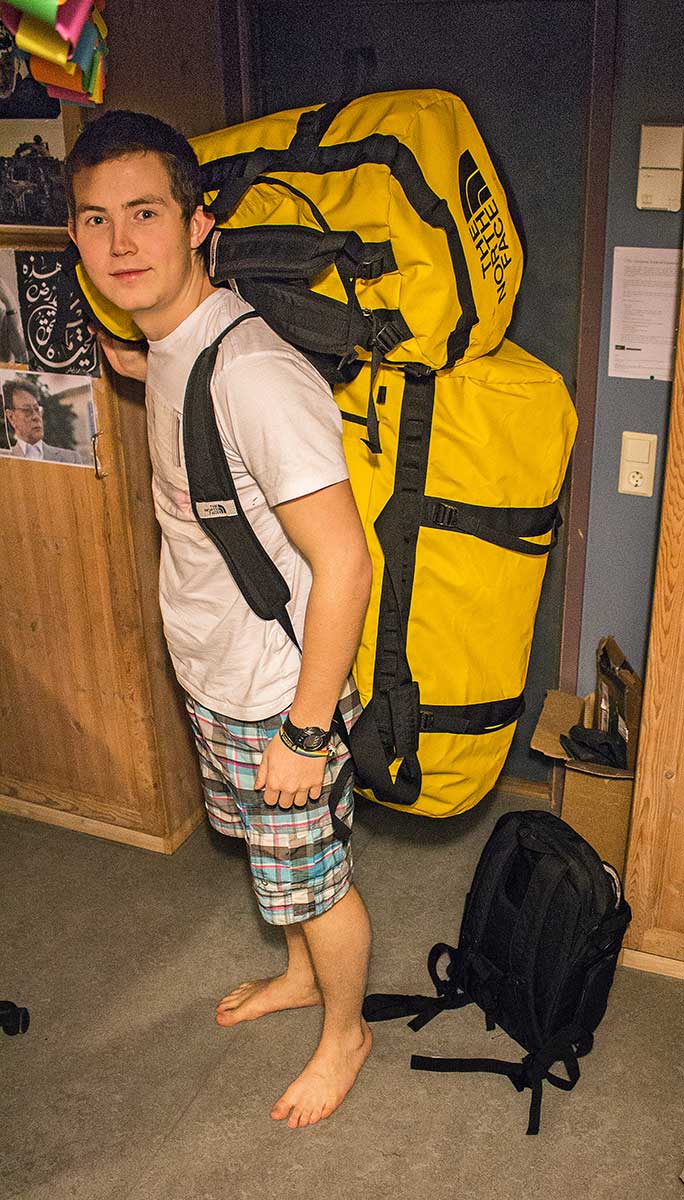
Åge - loaded down with laptops and clothing

Åge – loaded down with laptops and clothing

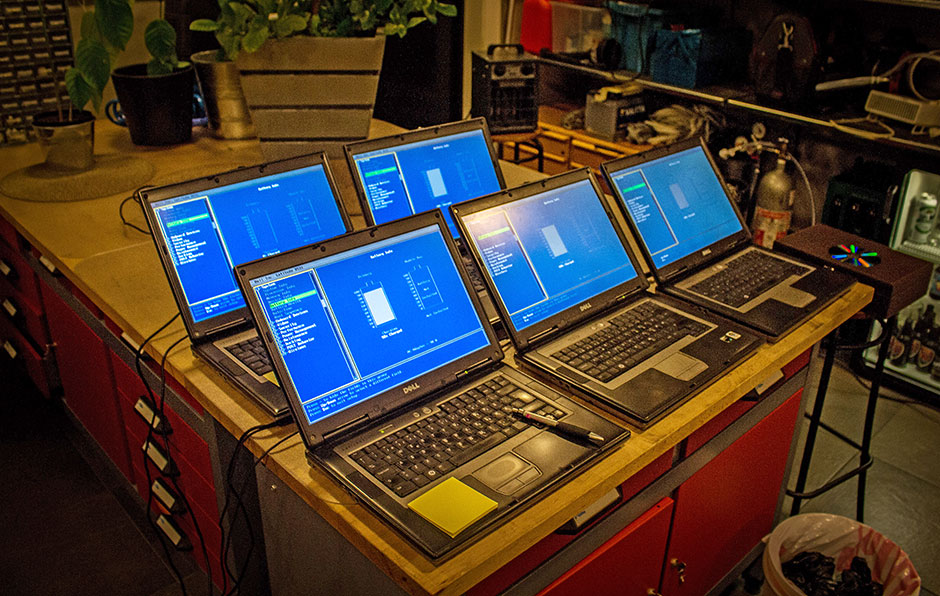
Understanding that many Norwegian schools throw out computers regularly to make way for newer models, Åge sent out emails to 25 schools in Oslo and Akershus Fylke, receiving responses from 2 of them, one of which produced concrete results. At Bjertnes School, he got in touch with Dag, who was responsible for the IT Department. Dag offered to wipe clean all the computers he could, and in addition asked teachers for chargers they’d be willing to donate. He devoted time and effort to supporting the initiative, ultimately providing 11 usable computers. The next step was to install the necessary drivers and programmes on these laptops. Over the Winter Break Åge got his parents to clear out their garage, creating a workshop space where he could work in peace, accompanied only by constant music. He borrowed heavy-duty extension cords from his neighbour, spread the 11 computers out, and got started, installing Windows XP then drivers and background software for components. In the survey sent to students he had asked for details about programmes needed, and then  custom-made the laptops to fit each individual’s specifications. He developed a system to make the process run smoothly, working from stage to stage with a check-list over 4 full days.

His parents thought it was a bit crazy, devoting all this time and effort to refurbishing used computers. Then he got his mother involved, asking her to collect clothing for the clothing store. She collected 50-60 kg of good quality clothing. Now Åge faced the challenge of returning to campus with 11 computers, a mountain of clothing, and 20 kg + of hiking equipment. Undaunted, he sent a mail to Larry asking if the College could help with postage, and received support in the form of postal packages, which lightened the load somewhat, but there was still a huge amount to carry. With duffel bags and backpacks stuffed with computers, clothing, and hiking equipment, he somehow made it back to Flekke. Back at College, Åge set about distributing the laptops and offering support to those who needed instruction.

What’s next? Åge hopes to acquire more computers in the future, adding to the supply available for students who arrive at RCN without their own.  His story gives expression to the well-known motto of “learning, earning and returning”.

Friluftsveka

2018-10-16T09:33:50+01:00March 1st, 2014|


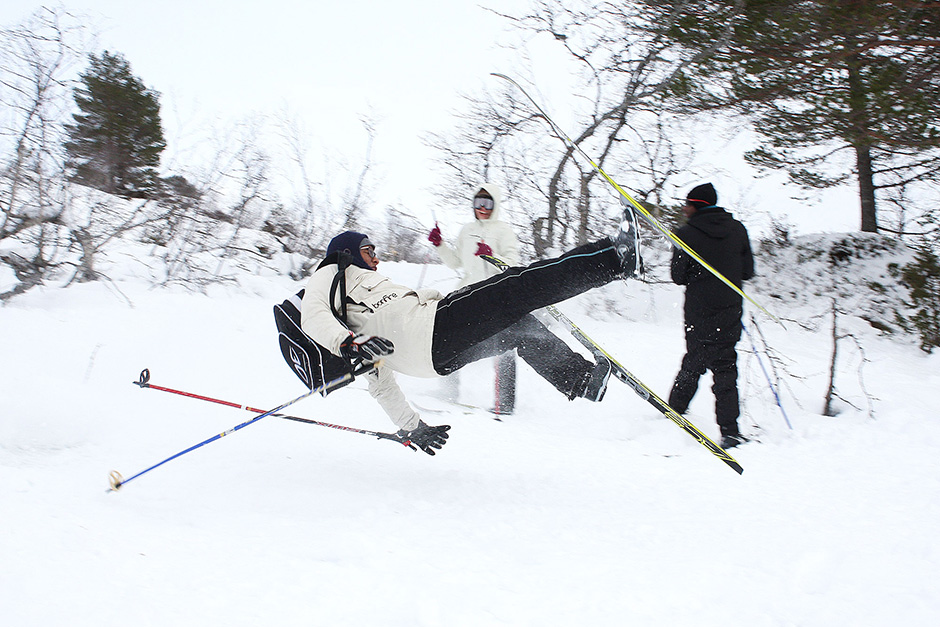
Eduardo is in complete control during this complex manoevre

Eduardo is in complete control during this complex manoevre

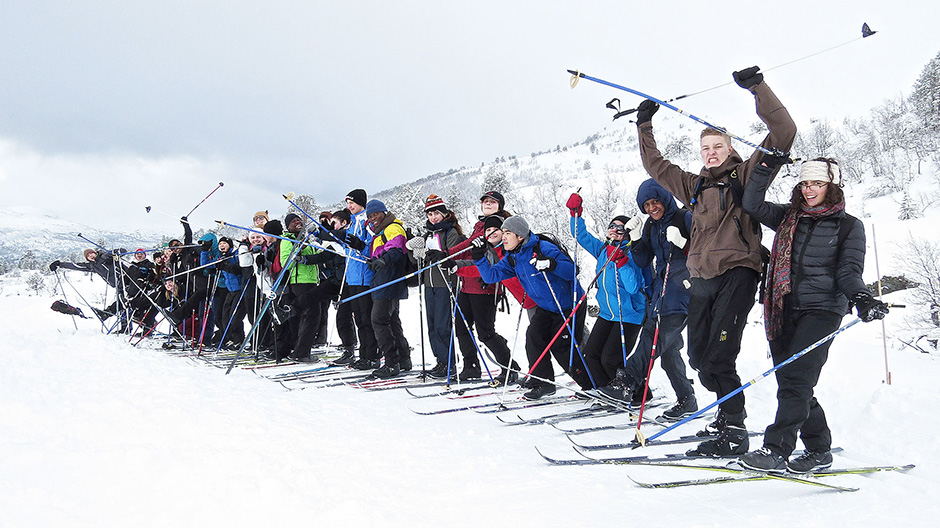
For some time in February we were wondering whether there would be enough snow for our week in the mountains,  ‘friluftsveka’. Fortunately the weather gods were on our side. With our base at a camp site near Stryn, all first year students had a real experience of Norwegian winter and ways to enjoy the mountain. There was a day of hiking led by Joakim Janninge and two full days of cross-country skiing in teacher-led groups. It was the first time on skis for many – so there were frustrations and bruises for some, but at the end of each day there were happy faces… and exhausted bodies. It was a week of snow, sunshine and being in nature. 

Click the link to see a gallery of photographs from the week.

New Website launched

2018-10-16T09:33:50+01:00February 24th, 2014|

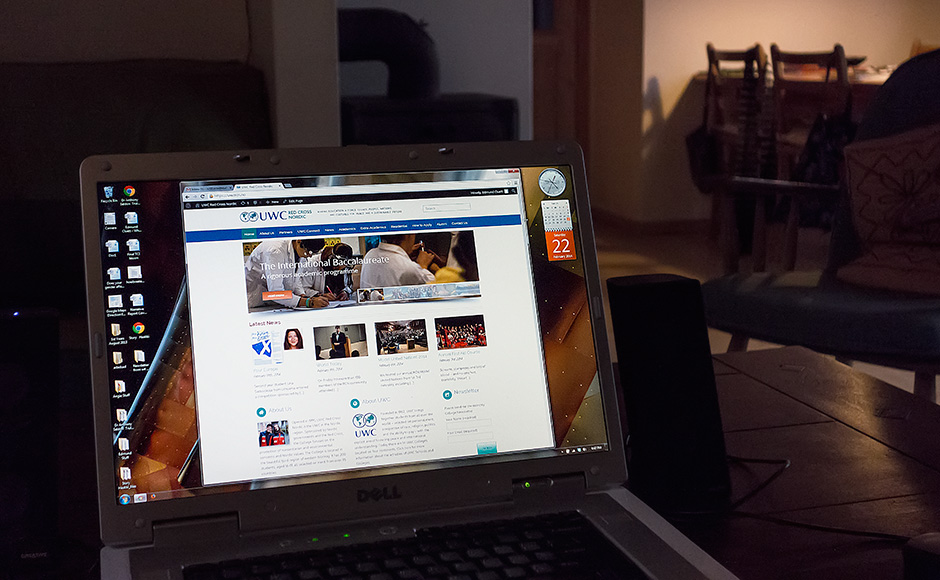
We are pleased to announce the launch of the new College website. An editorial team including staff, students, alumni, the International Office and RCN Board representation has helped to create the new website over the past six months. In this way we have made significant strides in developing our main interface with the outside world (including future applicants, parents, alumni, sponsors, supporters, and the general public). The aim for the website is that it should be informative, appealing and reflect the incredible diversity of activities and programmes at the College. We wanted it to be aesthetically appealing, but not at the expense of receiver quality in places that do not have broadband capacity. It is designed to keep our network abreast of developments at the College and also to provide detailed information about what we offer to all those prospective students across the world.

Our facebook page provides images of the day-to-day events at the College – and we invite you to stay connected with RCN through these media. We are also pleased to announce that, in tandem with the new website, we have redesigned our College database (w4) to include an alumni function which is designed to provide up-to-date standard information on individuals which members of our alumni body and former staff can access. Chris Hamper and an external consultant have been at the heart of the design. Our alumni team on campus (led by Arne) have worked together over the past eighteen months on the development of alumni engagement and the design of the database – alongside input from Jean-Paul Ginestier, as Volunteer Alumni Coordinator. We hope that the w4 will both provide alumni with the opportunity to look back through your own personal and unique RCN kaleidoscope and to stay connected with the RCN community in the years to come. Please follow this link to take you to the login page of W4.

Your Europe

2018-10-16T09:33:51+01:00February 19th, 2014|

Second year student Lina Sadovskaja from Lithuania entered a competition sponsored by the ‘Friedrich Ebert Stiftung’ a German foundation serving the following aims:

  • furthering political and social education of individuals from all walks of life in the spirit of democracy and pluralism,
  • facilitating access to university education and research for gifted young people by providing scholarships,
  • contributing to international understanding and cooperation.

The competition offered several options for participants and the one Lina chose was to write an essay outlining a vision of Europe in 2030. A winning submission would be rewarded with a two-day trip to Rome, preparatory workshops, and an interview with Martin Schultz, the President of the European Parliament.

Lina wrote the New Year’s speech by the President of the European Parliament for 2030 and we are very pleased to say that she was selected to travel to Rome as one of the competition winners.

Here is what Lina wrote:

Excellencies, Ladies and Gentlemen,

Dear friends,

I am honored and delighted to be able to welcome the New Year together with you, the citizens of the European Union and the members of the European Commission.I thank you for providing me with an opportunity to address the entire European Union as I could hardly imagine a better time to say a few words about the challenges and responsibilities we will be facing in the year to come.

Every decade has demanded a different European Union. However small the differences in our legislation now and then, every struggle has strengthened the foundation which our multidimensional organization is built upon. Our success in tackling these detrimental problems has finally left us with time and resources to deal with an issue more critical and no longer escapable. The predictions, which were questioned 20 years ago, can no longer be questioned. Climate change is no longer disputable. 2030 and the following years will be dedicated to an issue neglected for too long. Energy sustainability and climate change will be a priority the coming decade.

In 2015 with the newly elected parliament, a new economic direction was taken and a long-term economic commitment to the debt reduction of the member states in crisis was made. Through supranational economic governance and unified legislation, we were able to collaborate and create more than 24 million jobs and reduce the unemployment rates of those countries by almost a third. This type of achievement was only possible because of every single contribution made from the other member states of the European Union.

In 2021 following Lithuania and Latvia, Iceland and Macedonia’s entry into the Euro-zone, Ukraine was introduced as a candidate member. The economic strains of further enlargement of the union became the vocal point of parliamentary reform on redistribution of the EU structural funds and migration policies.  Yet again, through collaboration and distribution of political and economic responsibility, the EU member states have been successful in transporting stability to more countries in Europe.

Now in 2030, collaboration will be the essential component to revamping our environmental efforts. Although many countries had pledged to phase out their nuclear plants, some of these promises were never kept. It is hard to reach a system of justice when the efforts and responsibility taken varies within the Union and members fail to live up to their expectations. While countries like Sweden, Latvia and Iceland have already surpassed the renewable energy targets set for 2020, others have trouble fulfilling the goals of 10 years ago. It is clear that new efforts have to be made. The only way the European Union can combat the climate change in the following years is to promote the renewable energy sources and guarantee the independence from the external energy sources. I cannot stress the importance of EU’s GDP investment in the research and development of alternative energy sources enough.

There are three things that have to be done:

1) fulfillment of the old energy development and environmental targets;

2) creation of a truly competitive internal energy market;

3) investment in energy infrastructure of the member states with lower GDP rates;

We all need to pressure our elected officials to treat this issue with importance. How can we expect a stable economy if it is dependent on finite resources? It is time to make the EU as independent as possible not only in the coming year but in the coming decade.

I am honored to share this New Year resolution with you and make the environment and environmentally conscious energy development a priority in the politics of the European Union of the coming decade.

31 December 2029

Many congratulations to Lina. We look forward to hearing about the trip to Rome.

Go to Top