Global Concerns

2014-11-04T17:32:10+01:00October 27th, 2014|

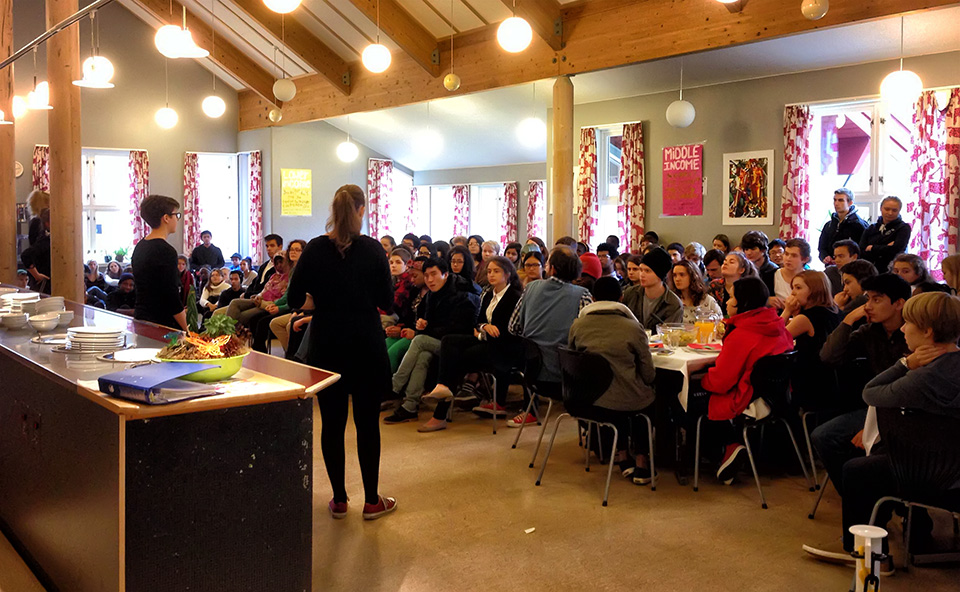
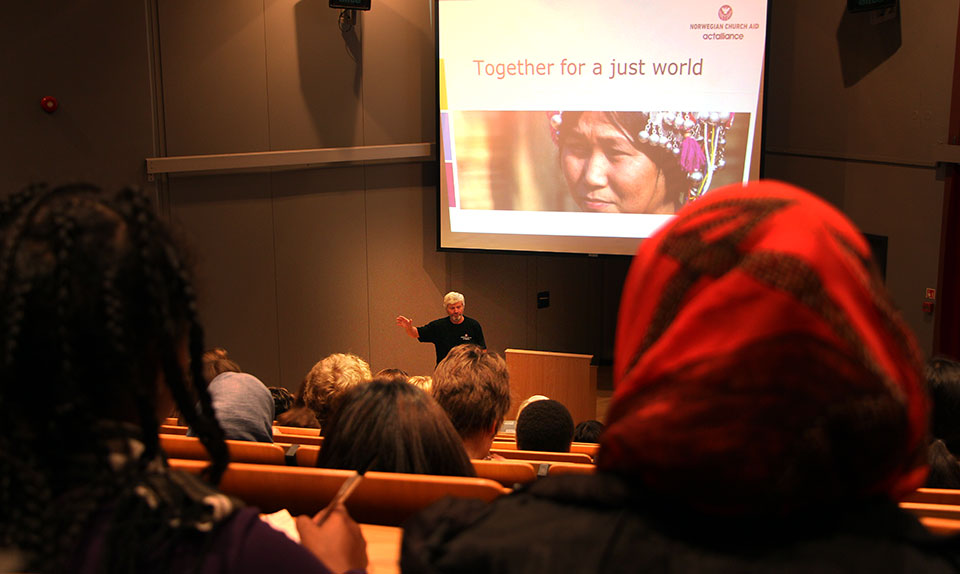
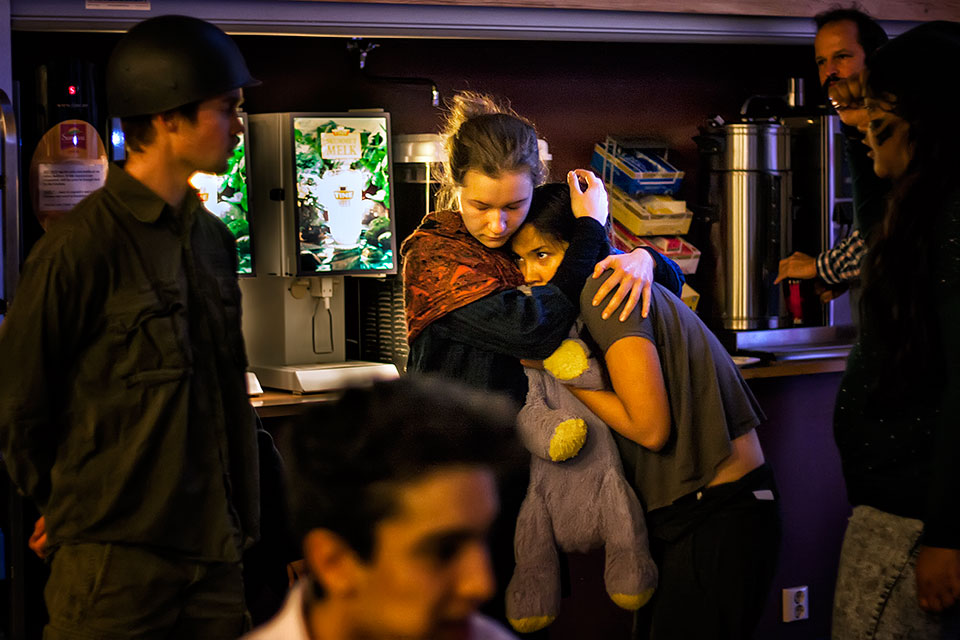
Global Concern Days at the College use invited guest speakers, workshops and student-developed projects to broaden and deepen the understanding of participants about a particular issue. On October 27th, we had the Humanitarian Global Concern. With two months of planning by the organizing team of the students, supervised by the staff, the day focused on the theme of ‘Children of War and Crime’.

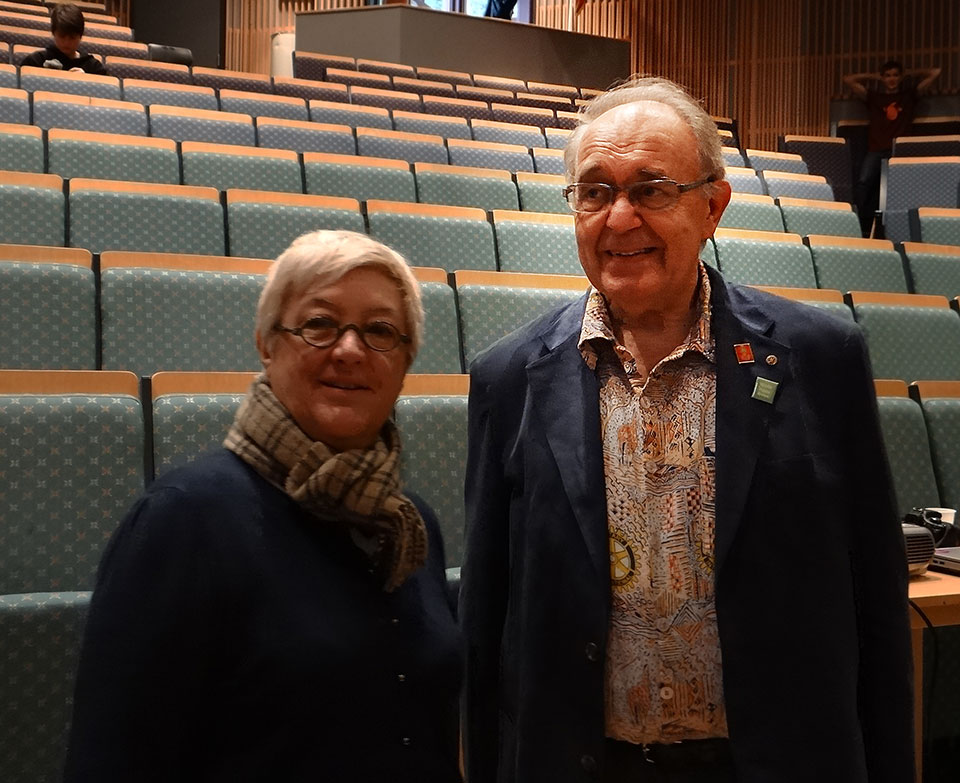
The organizing team invited four guest speakers –  Jostein By (the Rotary Head from Førde), Kirsti , from the A21 campaign, Gunnar Kartveit (Regional Consultant, Kirkensnodhjelp) and Anders Thorheim (Oslo Red Cross office) who was here to talk on International Humanitarian Law as part of the requirement for the Red Cross Diploma. It was good to have these speakers who added their professional expertise and knowledge to the day by leading presentations and workshops.

During lunch time, the whole student body participated in a role-play poverty banquet. Students were divided into low, middle and higher class: the lower class was served porridge, while the high class – only 25% of the students – feasted on chicken and pesto pasta. Though not exactly fun at the time, the lunch served as a successful reminder to us all of how many people struggle for food on a daily basis.
Disruptive Innovation

2018-10-16T09:33:30+01:00October 23rd, 2014|

2014-10-30-DIF02On the 22nd of October, five students from RCN, participated in an online panel discussion with students from twelve different UWCs. The debate was facilitated by the Ellen MacArthur Foundation’s Disruptive Innovation Festival, which aims to bring together thought-leaders, entrepreneurs, businesses, makers, learners and doers to catalyse system-level change for a future economy. The overarching topic of the discussion was revolutionizing education in the United World Colleges, and we were presented with the guiding question “What would the ideal education for changemakers look like?”. In light of this, we explored and discussed education with respect to the UWC mission statement, and how the current system might be improved or adapted in order to promote engagement and learning among students.
As a result of reflecting on our personal experiences related to the topic, we came up with several points we wished to put to the other students, in order to spark discussion. First of all, we emphasized the significance of the UWC’s role in cultivating global understanding, and how a UWC education should not only provide content but also serve an important purpose. We felt it was important to discuss how the current academic system, with the IB as the core, both helps us and perhaps also disadvantages us in achieving our mission statement. Some challenges we considered were the standardized assessment criteria, the lack of emphasis on individual initiative and in-depth projects as well as practical engagement in real-life situations. Therefore, we proposed discussing the development of a UWC-diploma, which would integrate aspects such as cultural understanding, conflict-resolution and environmental knowledge into the curriculum, and counteract the current tendency of students to view their academic life as separate from their residential experience. However, this would have to be the result of a thorough discussion in the whole UWC movement, and we hope to see an inclusive and lively debate on these issues in the time to come. Our proposals also included introducing a block system in which one subject is taught for a longer period of time, in order to allow students to focus and go more into depth.Additionally, we proposed creating a collective database of diverse resources accessible by all UWC students and teachers, as well as universalizing National Committee selection criteria and increasing academic and non-academic co-operation across the UWCs.

Overall, we found the debate both interesting and thought-provoking. The UWC students across the globe shared many interesting discussion points, and we hope to engage in further discussion as well as co-operation in the future. The debate concluded that we all need to engage in discussion about what the UWC movement is and what it could be in the future, and how we can adapt the academic component of UWC so that it encourages students to be active and engaged, and thus empower them to have a practical impact on their communities. We are grateful for the opportunity to engage in this debate, and we are excited to share and discuss this with the rest of the student body.

Elisabeth and Grete, on behalf the RCN student representatives
(Elisabeth, Grete, Zoe, Jonas, Izman)

Stop the Violence

2018-10-16T09:33:30+01:00October 23rd, 2014|

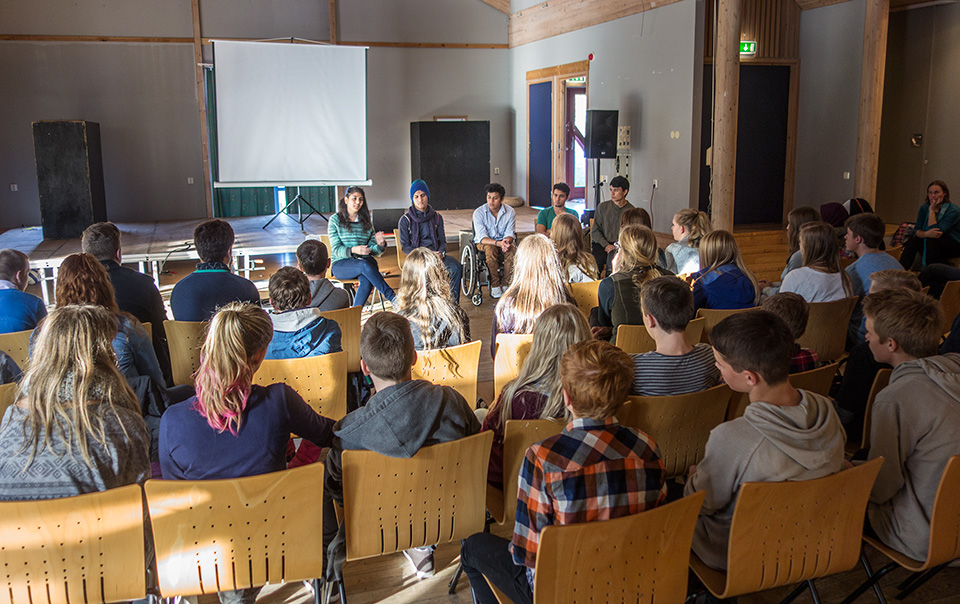
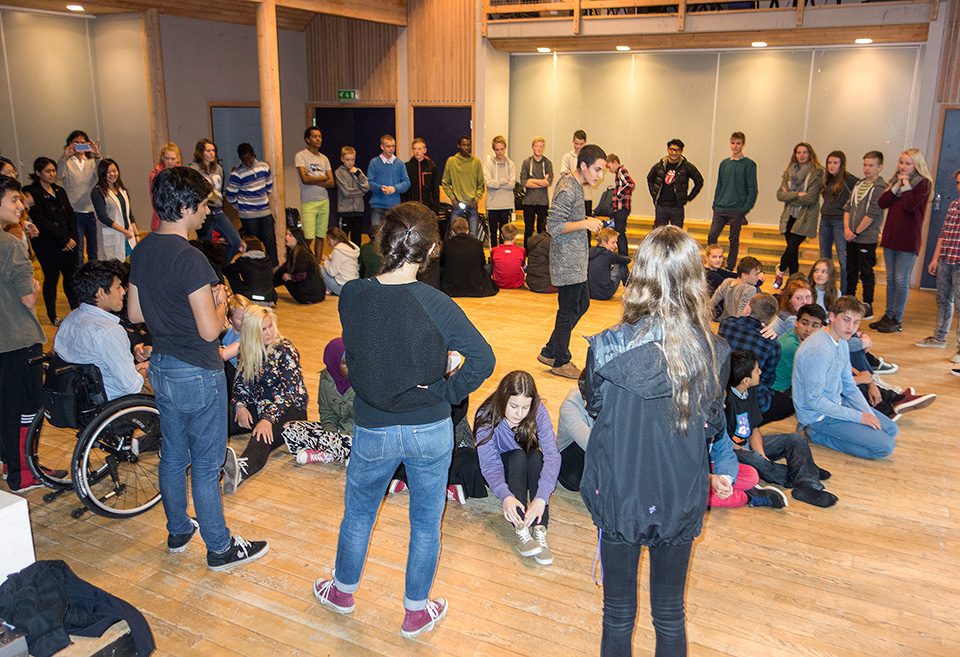
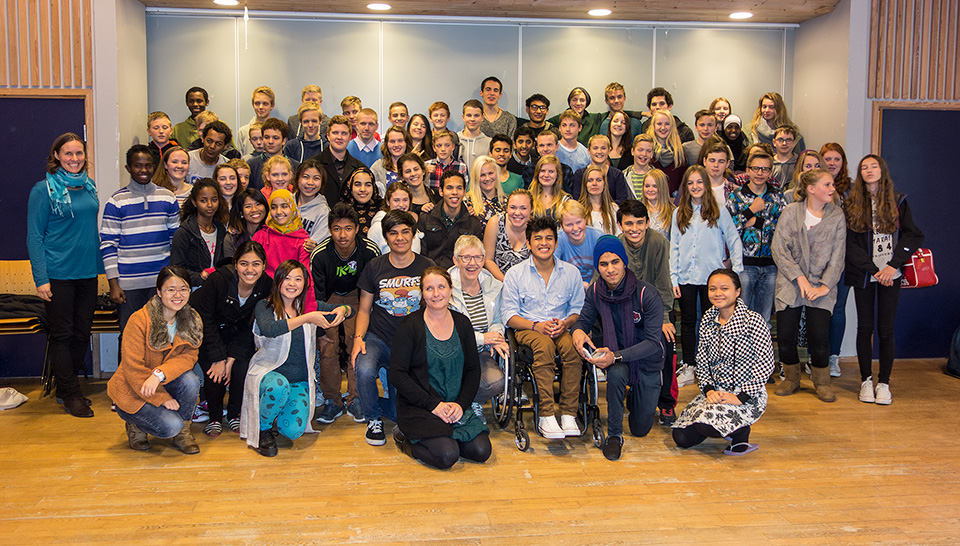
RCN student Mateo Dupleich Rozo leading a Theatre Game activity with our visitorsOn Wednesday we were visited by 48 ninth-grade students from three different schools in Svelgen and Bremanger, a district two hours north of the College. The visit came about through our cooperation with the Sogn og Fjordane Red Cross, who organize events and activities for people to highlight the effects of violence and teach how to develop tools to work locally against violence.

A day of activities was organised for our visitors: there were talks and presentations in the morning about our cooperative projects with Fredskorpset and several of our students, some from our Survivors of Conflict programme, others from areas of conflict, shared their stories with our visitors in a presentation in the Høegh Centre. Later in the day there was yoga, ice-breaker games and Theatre activities led by students. 


Our thanks go to the Red Cross, to our visitors who made the journey to the College, and to our students and staff  who put together such a varied and interesting programme.  As a future development from this visit, we are hoping – in co-operation with Sogn og Fjordane Red Cross – to develop a programme that can be offered to all schools in our region.

RCN students and staff with our visitors

UWC Dilijan

2018-10-16T09:33:31+01:00October 11th, 2014|

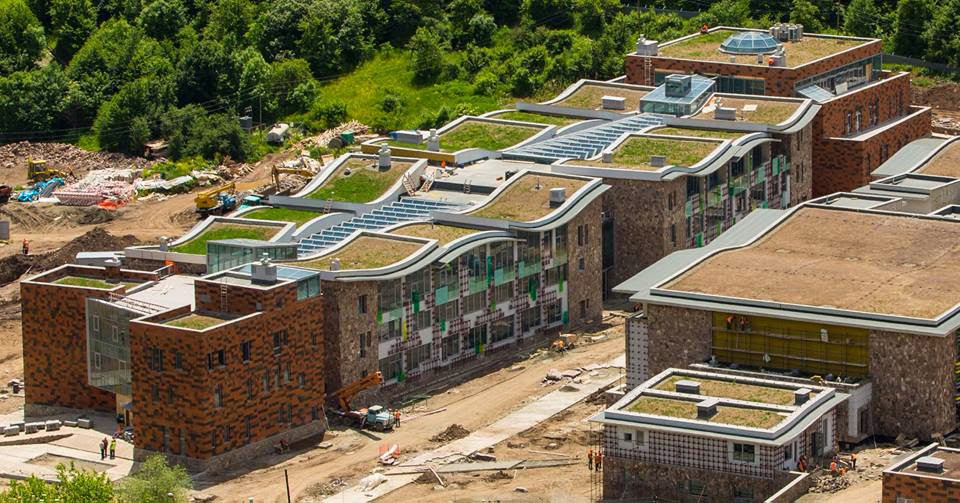
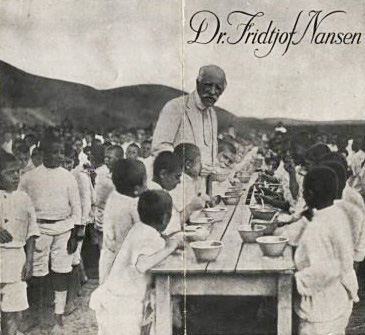
The students and staff at UWC Red Cross would like to express our delight that UWC Dilijan in Armenia is holding its inauguration today, Saturday 11th October 2014. Tom Gresvig (one of the founding team of UWC RCN), Stig Moltumyr (Director of Finance at UWC RCN) and Pål Brynsrud (UWC RCN Council) shall be attending the opening ceremony as representatives of our College.  It is particularly exciting that a UWC College has been established in Armenia given the historical partnership between Norway and Armenia. Fridtjof Nansen (1861-1930) – famous Norwegian explorer, author, statesman, Nobel Laureate – requested in 1921 in his capacity as High Commissioner for Refugees (appointed Nansen with a group of Armenian orphans in 1925by the League of Nations) that the League validated the “Nansen Passport”, which gave the stateless people the right to enter different countries. Thanks to these passports 320,000 Armenians won the right to move freely to their preferred country. Nansen was also responsible for resettling 7,000 people in Armenia in 1925 – these refugees who had been displaced during the First World and ill-treated up until 1925 when Nansen drew up and implemented a plan for resettlement. The Armenian Genocide-Museum and Institute issued a medal “Fridtjof Nansen 150” on the occasion of the 150th anniversary of Fridtjof Nansen to honour and celebrate his commitment and support of the Armenian people.

We wish the first cohort of students and new members of staff (drawn from Armenia and across the world) all the very best for the academic year ahead.

Larry
Rektor

Update:

Tom Gresvig, member of the founding team of UWC RCN and currently ‘our man in Armenia’, reports from the opening ceremony of UWC Dilijan.

Impressions from an Armenian Opening Ceremony

Where is Armenia?  An embarrassing question to have to ask for someone who is invited to go the opening ceremony of the lastest United World College, UWC Dilijan College.  Especially as we were to discover that it is the oldest Christian country in the world, and that there are more Armenians outside of Armenia than inside, some six million compared to little more than three million in the country itself.  And that by the time Jesus was amongst us on Earth it was one of the bigger realms stretching from the Mediterranean to the Black Sea and further on to the Caspian Sea.  And that it has its own language, written and oral used, in daily use all over the world, as well as their own religion.

But before 1990 it was hidden to the unobservant outside world as part of the Soviet Union, only to emerge as an independent country again at the fall of the Soviet Empire.  A Christian landlocked country surrounded by a Muslim world.   A country that has seen war and holocausts, but now enjoys peace and wants to pursue prosperity and happiness. This history in fact in combination made it possible for enthusiasts from inside and outside of Armenia to realize their dream of opening a United World College, and to convince the UWC International Board that this College will be sound and sustainable.  Armenians abroad, in Russia, the US, Lebanon and other places have been very successful business people, and they have combined to contribute to the development of Armenia, presently a poor country.  They think education is the ideal vehicle, and have found a truly stunning place to realize their dream, the Dilijan Valley up in the Mountains from the capital city of Yerevan.  From relatively barren land passing the big lake of Sevan one ducks into a long tunnel and emerge in this green Paradise Valley, as yet completely undeveloped with some 10.000 people living along the valley.  The weather is surprisingly different, much cooler and more clouds and rain,  and hence green.

In the course of eight years their plans are realized, and on Saturday the 11th of October 2014 some one thousand guests from far and near arrived in Dilijan to celebrate the opening of the UWC together with the Presidents of Armenia, Serbia (who happened to be in Yerevan for a football match) and of Nagorno Karabakh (a semi-independent part of modern Armenia).  We were whisked away from the luxury Marriotts and Hyatt hotels of Yerevan by racing police escorts to arrive at the College in time for the great festivities.   Students met us, and Stig and I handed over the Red Cross Nordic College gift to the new school, the big Nordic history book, the “Edda” by Snorri Sturlason.  All guests brought books for the school library.

The Prince of Wales appeared on a huge screen congratulating the founders, and hoping for fruitful educational cooperation with his Scottish Dumfries House Trust, and the Head of the Armenian Church, His Holiness Karekin II, Catholicos of all the Armenians blessed the school.  The guests returned in the motorcades for the big Friends Party in Yerevan, and Stig and I agreed that this has been a most colorful weekend, and we wish the Founding Head of College John Puddefoot and his school every success and hope for fruitful cooperation also with the Nordic College and Region.

Tom Gresvig

Here is an article from an Armenian newspaper about the new College.

Go to Top