Simon Ramsay (’15 – present)

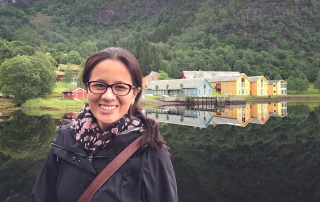
Simon Ramsay, member of staff at UWC RCN since 2015, took up the opportunity to teach at Waterford Kamhlaba, United World College of Southern Africa, for the month of July. Here he reports back:

I feel that a major strength of the UWC movement is the individuality of the schools and colleges, the idea of culturally and socially distinct institutions working under wider UWC values and implementing them in ways which further enrich the individuality of the schools and colleges. Therefore, when I was asked if I would like to work alongside colleagues in Waterford Kamhlaba for a month during the summer break, of course I was thrilled!

As our term finished and we said goodbye to our second years, and the first years prepared to head home on their summer break, I prepared to head to Swaziland and see what happens in a sister school and to try and learn more about our own college by comparison.

It must first be said that Swaziland is a gorgeous country with so much to offer and I encountered so much kindness and generosity during my stay. Resting outside of the capital, Mbabane, the school sits on a hill which gives it a remarkable view over the hills and valleys which make up the most populous area of Swaziland. The school runs 5 lower year groups before the IB Diploma Programme and offers scholarships from across Africa as well as from National Committees across the world. Around 70% of the students are from Africa and this understandably lends a distinct flavour to the college. It also reinforces the point that Africa isn’t a homogenous region and the ‘African’ nature of the school retains a remarkable level of diversity.

When I arrived I was given a tour of the campus from the Headmaster Stephen Lowry. The first thing that you notice is the huge range of sporting facilities. There are several full-size pitches, as well as basketball, volleyball and tennis courts. It was great to see these being used almost constantly, even if the students were lamenting that it was ‘winter’. On that note, when I told students how cold it could be during an RCN winter morning walk to class there was genuine horror on their faces and it reinforced to me our own students’ abilities to pull together in Flekke and support each other in that first winter, especially helping those who come from warmer regions!

As the tour continues we visit classrooms and see the refurbishments that have been taking place. The school is undergoing a period of rejuvenation, the opening of spaces and taking down of walls, as well as landscaping – and this lends to a feel of real collegiate interaction. It is becoming a wonderfully light and open campus and I would love to have seen it in the summer sun when it must be buzzing with students. As we finish the tour there were a few notes to be made. Firstly, the internet is terrible. Never again will I go to Sven and Bill in our IT Department and complain of slow internet. I am sorry…truly. Secondly, there is no internet in the classrooms – everything runs off laptops and obviously there are no smart boards. To be fair, I knew this already but once I was there I started to think … how would some of our RCN students manage without their internet-connected laptops in class!? The answer, obviously, is that we all work with what we have and to the limits and limitations of our environments … I think that perhaps we do not dwell on this enough as a college and perhaps at times we can all take what we have for granted. Perhaps we should consider turning off wi-fi on campus from time to time just to let ourselves know that it isn’t the end of life as we know it.

The largest difference between Waterford and our college at an academic level is almost certainly the inclusion of years 1-5. The younger students on campus makes it feel like a normal high school rather than an IB diploma college, and gives lots of opportunity for inclusion. The students interact a great deal with the younger years through sports and through ComServe (Community Service). The ComServe program is extensive and an absolute credit to the school. It is carrying out fantastic work locally and I had the wonderful opportunity to visit the Mpaka refugee camp on a trip as part of a long running association between the two.

At the weekend it was possible to travel around the small country and to enjoy the animals, reserves and hospitality. It feels like wherever you go in Swaziland the reputation of Waterford precedes you.

I would encourage all of us to read more about the formation of Waterford and the work that has been going on for the duration of its existence – as well as for UWC teachers and students to reach out and connect with those in our sister schools and colleges. We talk so much about the diversity within our campuses. It strikes me that now is the time to look at the diversity across UWC – the people are there and are eager to collaborate and we should be looking at connecting with them.

From the staff to the students, the leadership to the maintenance staff, there is a wealth of experience to learn from and it was a pleasure to explore such a remarkable school in such a unique setting. I feel we would all gain a lot from understanding more about our sister schools and colleges, and that is most definitely true of Waterford!

For profiles and news of other students, alumni and staff, click here.
2017-08-03T07:59:53+01:00August 3rd, 2017|

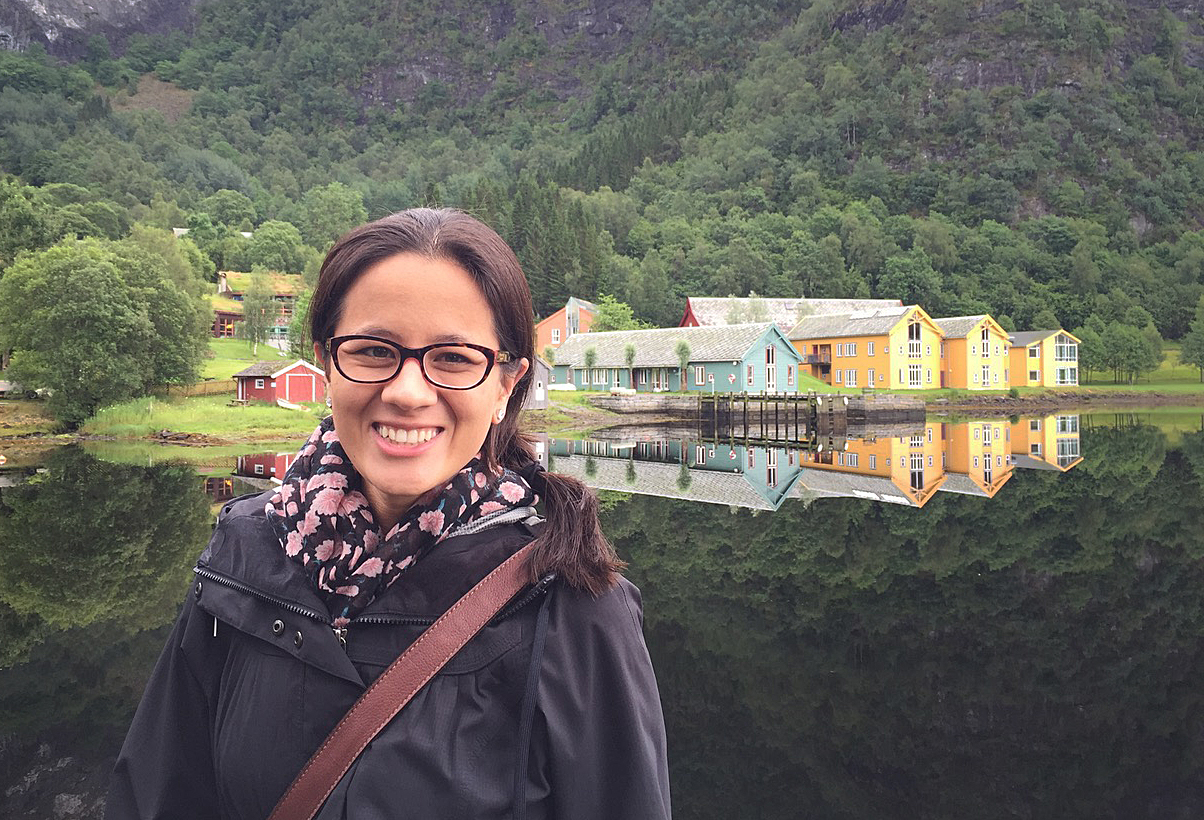
Jeanette S. Pedersen (’02 – ’04)

Although I graduated from the United World College Red Cross Nordic (UWCRCN) over a decade ago, I still think of my two years in Flekke often and refer to them as the best two years of my life. It was during these two years that I not only learned a lot about myself, including my core values and passions, but also about the world. I am grateful to have lived and learned with other young people from across the world and different social, economic and cultural backgrounds at such a tender age. Not surprisingly, my two years in Flekke have had a huge impact on who I am today, and the choices that I have made.

When I graduated from UWCRCN on a sunny spring day in May 2004, I was not exactly sure what career path I wanted to take, so I was thrilled to do a UWCRCN supported Third Year Option Project that allowed me to volunteer at a school and hostel for children in rural India for several months followed by travelling around the world. I felt a keen sense of wanting to contribute to making the world a better place after having lived a life of plenty of opportunities growing up in northern Europe. When I reflect back on my time with the excited and curious kids I was fortunate to meet, I am certain they taught me more than I ever taught them.

After a year of learning, growing and exploring, I moved across the world to study Sociology and Health Sciences at Simon Fraser University in Vancouver, Canada. Resisting the urge to select a program that had a clearly identifiable career outcome, I decided to learn more about how society and the world we live in shape the health of individuals and communities. In my final year, I found myself as an intern at an Indigenous community health centre in Vancouver’s Downtown Eastside – one of the poorest neighbourhoods in Canada. There a dedicated Family Physician and advocate showed me the many possibilities for promoting social change as a Family Physician, as he tirelessly helped and advocated for patients whose lives were complicated by poverty, homelessness, complex medical conditions, addiction, and trauma. I remember clearly the day when I decided: “I want to do what he does!”

My path in medicine has not always been linear or easy, but it has been guided by my core values, which has always provided me with a sense of purpose and being “at home”. It is this “at home” feeling, which I can take with me wherever I go on my journey, which is one of the greatest gifts that the UWCRCN experience has given me.

Jeanette S. Pedersen is half Danish and half Thai. She lives in Vancouver, Canada, with her husband. She completed her medical school training at the University of Calgary, Canada, and is currently a Family Medicine Resident at the University of British Columbia in Vancouver. She considers herself fortunate to be training at St. Paul’s Hospital and in Vancouver’s Downtown Eastside – the community that inspired her to become a Physician.

For profiles and news of other students and alumni, click here.

2017-07-20T09:40:02+01:00July 20th, 2017|

RCN Delegation Visit to Åland

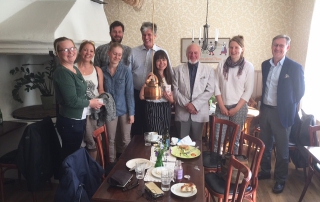
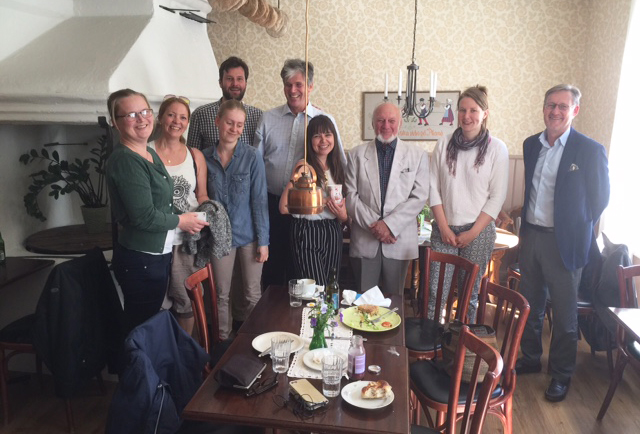
The RCN delegation of Arne, Lisa, Kathini, Poppy and Larry met at Bagarstugan with alumni and some of the founding team (Kjell Nilsson and Leif Jansson) of the partnership between UWC Red Cross Nordic and Åland. We had 6 alumni present including the very first student from Åland at the College and Leonardo (Italy) who has a summer job with the Ålandic Red Cross and is currently studying at the University of Uppsala, Sweden.

Our programme was coordinated by Wille Walve (RCN alumnus, Minister of Social Affairs and Health for the Government of Åland, former RCN Board member, and former Head of the Åland delegation to the Nordic Council).

Wille also set up a meeting with the Government including the Premier Mrs Katrin Sjøgren – and this provided us with the opportunity to present the College and Åland’s special place within our Nordic cooperation. Åland is a home-ruled, demilitarized and Swedish-speaking territory belonging to Finland and a member of the European Union since 1995 – and we are delighted that it continues to be a partner of our College.

2018-10-16T09:32:02+01:00June 29th, 2017|

UWC Learning Support

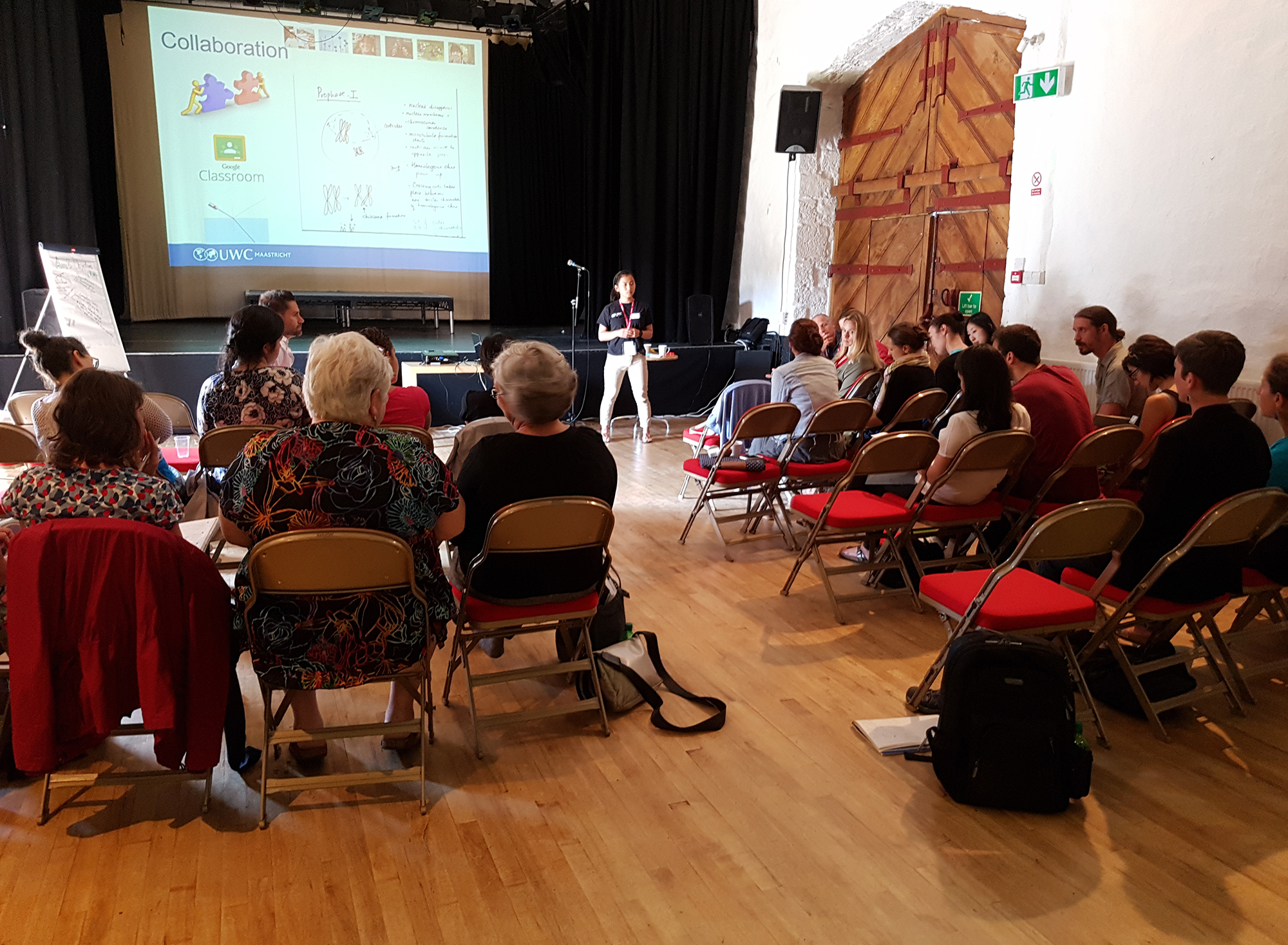
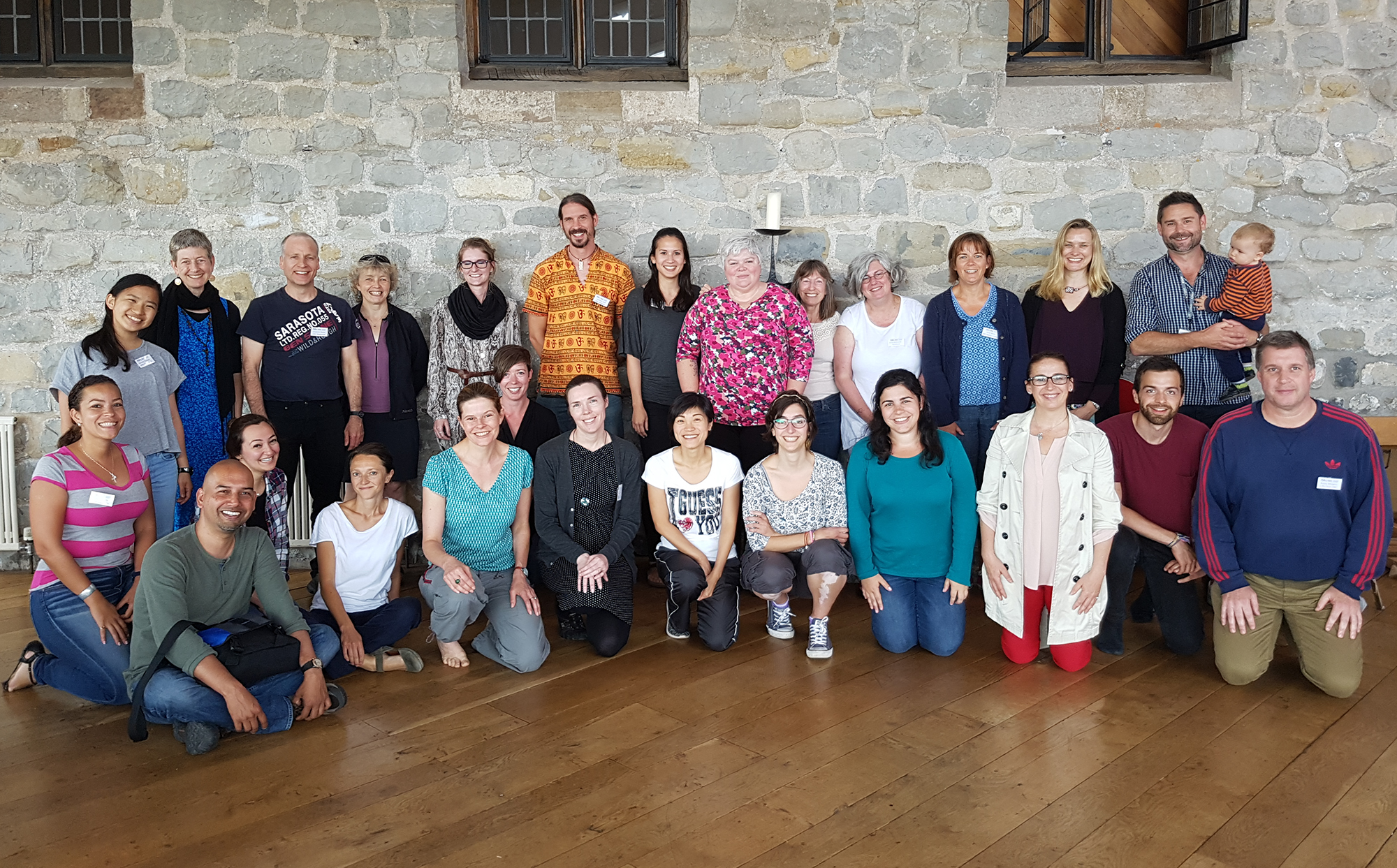
From 21-23 June staff from 13 UWCs met at UWC Atlantic to consider how to improve support for those students who come to us from non-English-speaking backgrounds. The conference, which was organised by staff at UWC Maastricht and UWC Atlantic, brought us together to identify and share good practice, identify areas in need of development, and work towards creating a unified action plan to establish solid support structures across the UWC movement and in our individual contexts. The conference was opened by Peter Howe, the new Head of UWC Atlantic, and the keynote speaker, Dr. Marco Tamburelli, a Senior lecturer in Bilingualism at the University of Bangor, Wales, led to us to consider the importance of actively encouraging mother-tongue use on our campuses. Two days of intense conversations gave us all much to think about and take back to our communities. It was stimulating and nourishing to learn from each other and to engage with others who “spoke the same language”. The support for those learning English needs to go hand-in-hand with the pastoral support systems and we hope that the next conference can include staff involved with both areas of UWC life. With the help of our newly formed network and a UWC Hub group space where we can share materials and ideas, we look forward to improving the support we offer to all students, not just those who are learning English.

2018-10-16T09:32:02+01:00June 28th, 2017|
Go to Top